
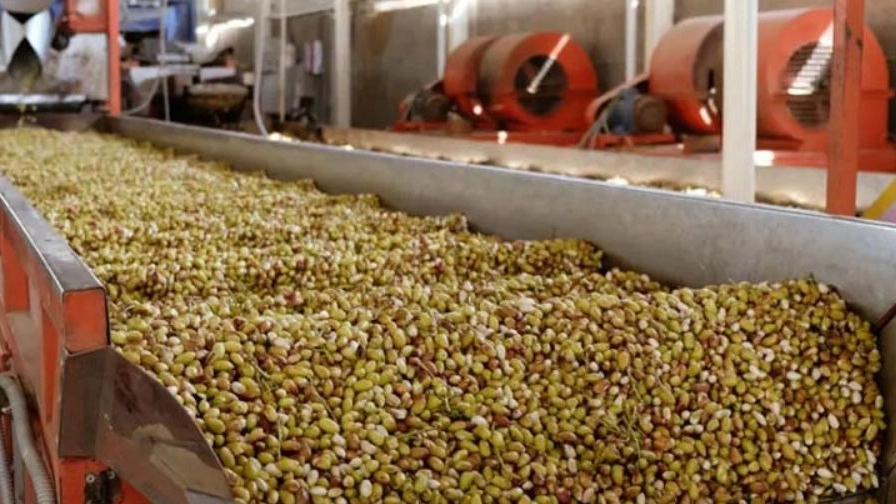
Considering the widespread cultivation of pistachio trees in different cities of Iran, the need for transformation industries for this fruit is felt more than before. Today, to increase the added value of this fruit, pistachio processing is carried out in different ways and at different levels. Pistachio consists of three different skin layers and separating each of these skins can be considered as one of the processing levels of this product. The sorting process is all done in the pistachio processing terminal. Finally, after passing through these stages, pistachios are sold to target markets in various forms, including pistachio kernels, powder, granules, flakes, and chips.
What is a pistachio process?
Pistachios are one of the agricultural products that are widely used in the food industry. The use of this product in other food industries has made the processing of pistachios a must to meet the needs of other food products. Today, pistachios are used in different forms to produce all kinds of desserts, sweets, sausages, biscuits, ice cream and other products. But what is important in the meantime is the production of a quality product to supply raw materials for manufacturing industries.
Pistachios are among the plants that lose a large amount of their volume in the pistachio processing process. In general, about 30% of the weight of pistachios is lost during the processing process due to the separation of the hard shell of this plant. In the final stages of the processing work, about 50% of the initial weight of the plant remains. In processing factories, this process takes place in the complete pistachio processing line. In pistachio processing lines, the whole product of the plant is imported and the final pistachio product is produced and provided to consumers.
Why is it important to implement the pistachio processing process?
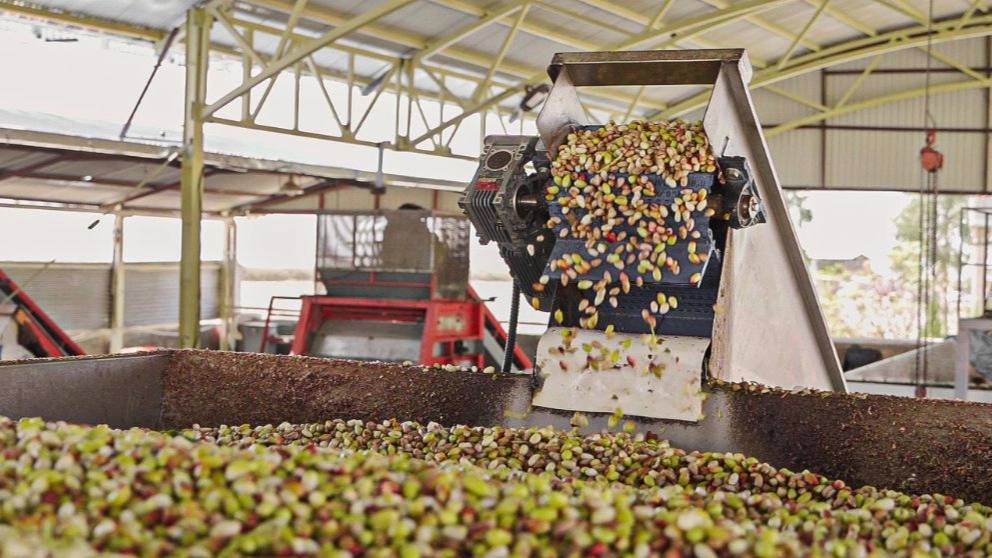
Full line of pistachio processing and its steps in the factory
In the pistachio production cycle, the primary product may suffer some damage at each stage when it enters the processing path. This can significantly reduce the final value of the primary product. As a result, producers process the primary product to reduce damage in the production cycle. Finally, in this cycle, the product is separated and graded by the producer. Next, the products produced based on the grading are entered into the product processing cycle.